
December 12, 2025

The Hidden Costs of Selling on Amazon: A Complete Fee Breakdown for 2025

Strategy

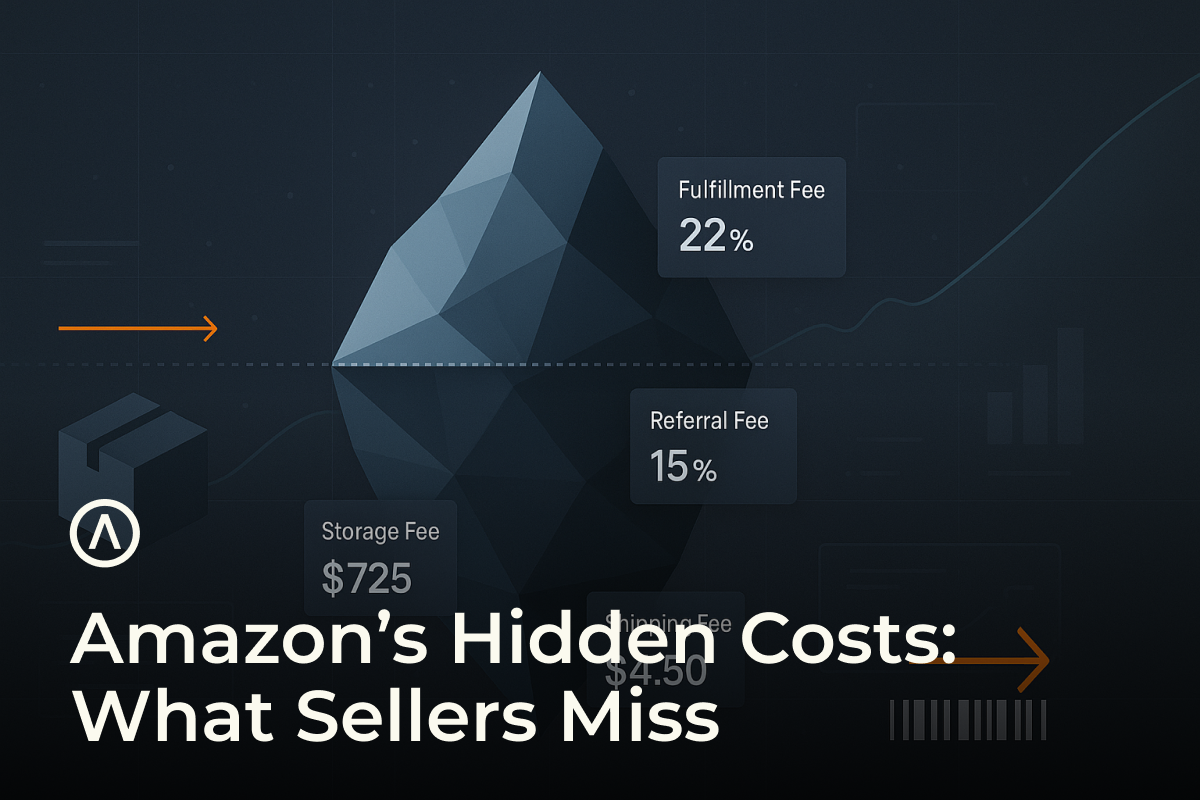
Selling on Amazon gives brands access to enormous demand—but it comes with a complex cost structure. Many sellers only account for the obvious expenses like referral fees while overlooking hidden costs that quietly shrink profits.

With Amazon keeping most fees stable in 2025, sellers now have a clearer landscape—but that doesn’t mean selling is cheaper. It simply means you can plan more accurately.

This updated 2025 guide breaks down every Amazon fee, including the less obvious ones, while offering SEO-driven insights, answer-optimized formatting, and profit-protection strategies.

Quick Answer: What Are Amazon’s Fees in 2025?

Amazon sellers typically pay:

  • 15% referral fee (average)
  • FBA fulfillment fees based on weight and size
  • Storage fees (higher in Q4)
  • $39.99 monthly for a Professional account
  • Additional hidden fees: returns, removals, ads, coupon redemptions, and more

Most FBA sellers see 30–40% of their revenue go to Amazon.

What Fees Does Amazon Charge Sellers in 2025?

Amazon’s core fees fall into three categories: account subscription, referral fees, and fulfillment costs. These standard fees are the cost of admission to Amazon's marketplace, and every seller should be familiar with them:

1. Professional Account Fee

  • Cost: $39.99 per month flat fee
  • What you get: Unlimited sales volume and access to advanced tools
  • Alternative: Smaller sellers can use the Individual plan at $0.99 per item sold

2. Referral Fee (Commission)

Amazon takes a percentage of each product's selling price as a commission for providing the platform and customers.

  • Average rate: 15% in most categories
  • Range: Can be as low as 8% for certain categories or higher for others (like jewelry)
  • Example: A $50 item in Sports & Outdoors would incur about $7.50 in referral fees
  • Tip: There's usually a minimum referral fee of $0.30 per item

3. FBA Fulfillment Fees

If you use Amazon's FBA service, you pay per-unit fees for picking, packing, and shipping your orders.

  • Fees depend on the size and weight of the item
  • A small standard item might have a $3–$4 FBA fee
  • An oversized or heavy item could cost $10+ to fulfill
  • Good news: Amazon froze FBA fee increases for 2025

4. Monthly Storage Fees

Storing inventory in Amazon warehouses costs money based on volume (cubic feet) per month.

  • Jan–Sept: Around $0.75–$0.87 per cubic foot for most products
  • Oct–Dec (Q4): Jumps significantly—often 3× higher due to holiday peak storage rates
  • Long-term storage: Beyond 6 months triggers additional surcharges

5. Closing Fees (Media Products)

If you sell media items (books, DVDs, etc.), Amazon charges a fixed closing fee on top of the referral fee.

  • Example: Around $1.80 per item for books
  • Applies mostly to media categories

Important: Both a referral fee and an FBA fee will apply to every FBA sale—together they might take roughly 30% (or more) of your product's sale price.

What Are the Hidden Costs of Selling on Amazon?

Beyond the big three fees, Amazon charges a variety of additional costs that—if ignored—can dramatically erode profit.

1. Returns and Refund Costs

Amazon offers customers easy returns—great for buyers, but sellers bear the cost.

  • For FBA sellers, when an item is returned, Amazon refunds the customer and often charges you a returns processing fee (usually equivalent to the original fulfillment fee)
  • You might also lose the referral fee if the sale is reversed
  • If the returned item is not in sellable condition, you may have to write it off as a loss
  • Budget tip: Allocate 2-5% of revenue for returns

2. Inventory Storage Surprises

Beyond monthly storage fees, watch out for:

  • Long-term storage fees: If your product sits in an Amazon fulfillment center for over 181 days, Amazon charges additional fees per cubic foot (aged inventory surcharge)
  • High-volume listing fee: Affects sellers with over 1.5 million SKUs (won't impact most small sellers)

3. Removal and Disposal Fees

If you decide to pull inventory out of FBA or have Amazon dispose of unsold stock:

  • Removal orders (to ship inventory back to you) cost $0.25 up to a few dollars per item, depending on size
  • Disposal orders (having Amazon throw it away or liquidate it) have similar costs
  • This can add up if you misjudge demand and need to clear out surplus units

4. Advertising Costs (Pay-Per-Click)

While not a fee paid to Amazon in the same way as the above, Amazon Advertising is practically a required expense to succeed on the platform.

  • Sellers often spend 5-15% of their revenue on PPC ads
  • In a realistic scenario, you might allocate ~25% of a product's price to advertising to stay competitive
  • If you don't factor ad spend into your per-unit profit calculations, you'll be blindsided

5. Coupon & Deal Fees

Running promotions isn't free:

  • Coupon fee: Typically $0.60 each time a coupon is redeemed by a customer
  • Example: If 1,000 customers use your coupon, that's $600 extra cost in addition to the discount
  • Lightning Deals or Prime Exclusive discounts may also carry fees

6. FBA Prep Service Fees

If you choose to use Amazon's optional prep services (like labeling, poly-bagging, or bubble wrapping):

  • Amazon charges per-unit fees for these services
  • Labeling might cost around $0.30–$0.50 per unit
  • Cost-saving tip: Prep and label products yourself or via your supplier

7. Other Miscellaneous Fees

Watch out for niche fees like:

  • Rental Book service fee (if you rent textbooks)
  • Stock removal surcharge during peak seasons
  • Long-distance inventory transfer fees if using distributed inventory programs

Bottom line: These "hidden" costs can collectively take a significant bite out of your profits if unmonitored. Always review your Amazon settlement reports and fee statements to identify any unexpected fees.

Expert Tip from Algofy

One way to avoid surprise fees is to regularly perform an audit of your SKU profitability.

We've helped clients analyze each product's true profit after all Amazon fees and ad costs. Often, we find a product that looks profitable on the surface is barely breaking even once storage and ad spend are accounted for.

Staying on top of these costs is crucial for long-term success on Amazon.

How Can Sellers Reduce Amazon Fees and Protect Their Margins?
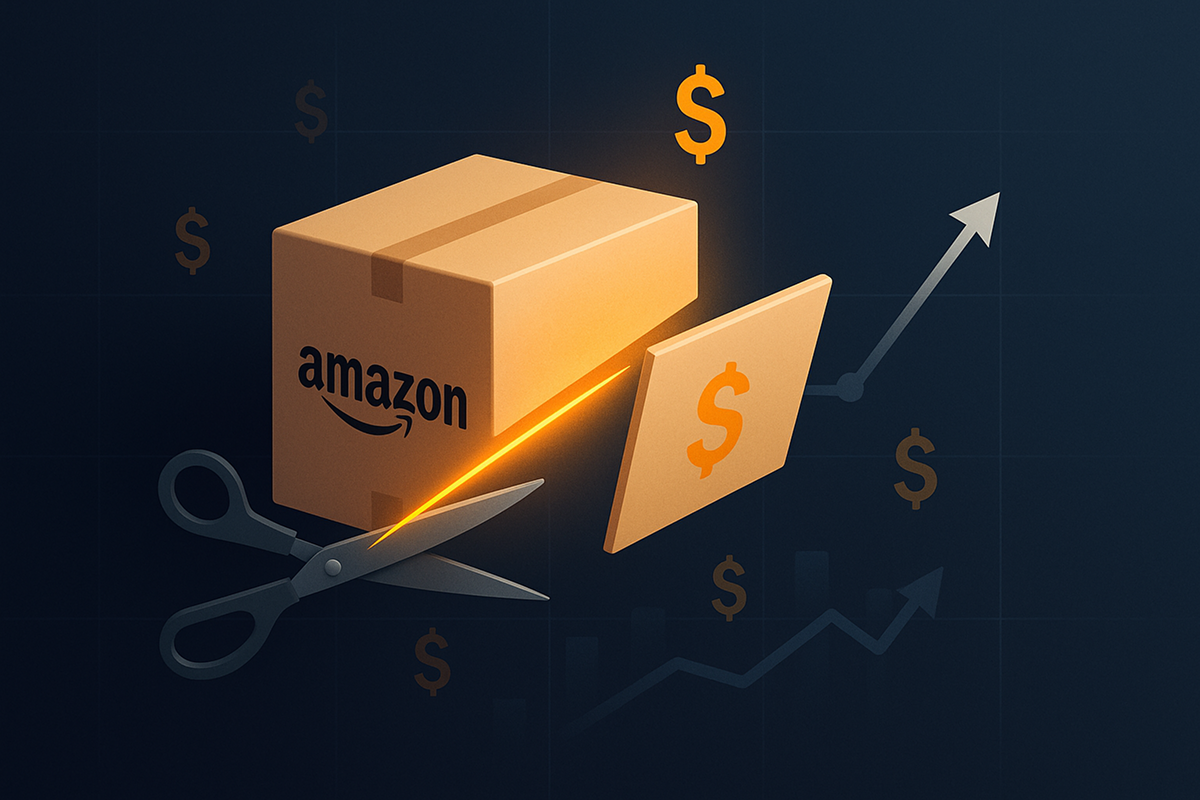
While Amazon's fees are inevitable, smart sellers can minimize their impact. Here are some strategies to keep more of your money:

Strategy 1: Choose the Right Fulfillment Method

Choosing the best fulfillment method starts with evaluating whether FBA or FBM is more profitable for your product line. FBA provides Prime shipping and typically boosts conversion rates, but sellers must account for its fulfillment and storage fees. Products with slim margins or items that are oversized or heavy often perform better under FBM or a hybrid model. Many sellers use FBA for small, fast-moving SKUs to capture Prime benefits while merchant-fulfilling larger or slower-moving products to preserve profit.

Strategy 2: Optimize Product Size & Weight

Lowering Amazon FBA fees often comes down to minimizing a product’s size and weight. Designing or packaging your product to fit within a cheaper FBA tier can immediately reduce costs, especially if you keep it just under major weight breaks or dimensional thresholds, which can save more than a dollar per unit. Avoid adding unnecessary packaging weight, and look for opportunities to fold, compress, or reconfigure the product to reduce volume. Across thousands of units, small size and weight optimizations translate into significant fee savings.

Strategy 3: Minimize Long-Term Storage

To reduce Amazon’s long-term storage charges, treat FBA facilities as short-term distribution centers rather than warehouses. Send replenishment inventory regularly so you're consistently in stock while avoiding large surpluses that sit for months. When items slow down, consider clearance promotions or removing inventory before the six-month mark to avoid penalties. Using Amazon’s inventory analytics tools helps forecast demand accurately and spot aging stock before fees accumulate.

Strategy 4: Leverage New Seller Programs

Amazon regularly introduces programs that temporarily reduce or waive fees, and taking advantage of these incentives can significantly lower launch costs. The FBA New Selection program waives storage and removal fees for new-to-Amazon ASINs for a limited period, and in 2025 Amazon is also waiving certain inbound FBA fees for new products. Layering these savings into your product launch strategy can improve early profitability and cash flow.

Strategy 5: Calculate All Costs in Pricing

Strategic pricing starts with a complete understanding of your total costs. Before launching or reordering any SKU, run a full profit calculation that subtracts every fee—referral fees, FBA charges, storage, returns, advertising, and any other recurring costs. A strong goal is to maintain a net margin of 20% or higher after all expenses. Amazon’s built-in fee calculators and the fee preview tool on each listing make it easy to model your true profitability and set optimal pricing.

Strategy 6: Continuously Improve Efficiency

Improving operational efficiency can meaningfully reduce your effective Amazon fee burden. Enhancing your product listings and reviews increases conversion rates, which in turn lowers your advertising cost of sale (ACOS). Reducing return rates also protects your margins by cutting refund and processing costs. Overall, better operations and strong listing quality create compounding financial benefits, helping offset rising Amazon fees.

Strategy 7: Consult Experts if Needed

Amazon's ecosystem is complex. If you're struggling, consider getting a professional audit.

Algofy's team specializes in analyzing Amazon seller accounts—we've managed over $100M in Amazon sales for clients, helping identify cost-saving opportunities.

Remember: Every dollar saved in fees is a dollar added to your profit.

Common Questions on Amazon's Fees

Q1: How much of my sales will Amazon fees take in 2025?

Amazon fees in 2025 typically consume 30–40% of an FBA seller’s sale price, although the exact percentage varies by business and product type. As a general guideline, sellers can expect around 15% to go toward referral fees and another 15% toward FBA fulfillment and storage fees, totaling roughly 30% before advertising. Once advertising costs are factored in, total Amazon charges often reach 40% or more of the final sale price. To determine precise costs for your products, Amazon’s fee calculator tools and the fee preview feature offer the most accurate estimates.

Q2: Did Amazon increase any seller fees for 2025?

Amazon did not introduce any new seller fee increases for 2025. Referral fees and FBA fulfillment fees in the U.S. remain unchanged from 2024 levels, and some costs were even reduced—such as certain inbound FBA shipping fees for large items. However, existing fee structures still apply, including Q4 storage surcharges and all previously established FBA and storage fee categories.

Q3: What is the Amazon referral fee?

The Amazon referral fee is Amazon’s commission for each sale, calculated as a percentage of the product’s total price, including the item price, shipping, and gift wrap when relevant. Most product categories carry a 15% referral fee, though some categories have lower percentages—such as 8% for electronics—or tiered structures. Certain Amazon device categories have significantly higher fees at 45%, while books remain at a flat 15%. For exact rates, sellers should refer to Amazon’s category-specific referral fee schedule.

Q4: Which Amazon fees are often overlooked by new sellers?

New sellers often overlook:

  • Storage fees: Especially the spike during October-December with overstocking
  • Returns fees: Amazon may charge for return processing; damaged returns may need to be written off
  • Removal fees: If you need to pull inventory
  • Long-term storage surcharges
  • Coupon redemption fees: $0.60 each time a coupon is used
  • Payment processing or currency conversion fees for non-US sellers

Keep an eye on your seller account reports and read Amazon's fee documentation thoroughly.

Q5: How can I lower my FBA fulfillment fees?

While you can't negotiate Amazon's FBA rates, you can reduce the fees you incur:

Size optimization:

  • Keep your product in a lower size tier
  • Reduce packaging dimensions or weight to avoid oversized charges
  • Provide accurate measurements (products are sometimes incorrectly categorized)

Special programs:

  • Enroll in the Small and Light program for items under $10 (discounted fulfillment fees)

Improve sell-through:

  • Products that linger incur more storage fees
  • By selling faster, you make FBA more cost-efficient

Alternative fulfillment:

  • For very heavy/bulky items, consider using a 3PL provider
  • You can still list on Amazon (FBM) while avoiding high FBA fees

Q6: Is selling on Amazon still profitable after all these fees?

Yes—if you choose products with healthy margins and manage fees proactively. Amazon offers unmatched traffic and conversion potential, but requires careful cost control.

Make Every Amazon Dollar Count

Amazon's marketplace in 2025 offers huge opportunity but also a complex cost structure.

Sellers who succeed are those who take the time to learn and plan for every fee—from the obvious referral cut to the subtle storage creep or return deductions. By understanding the full fee breakdown and proactively managing these costs, you protect your hard-earned margins.

The good news: With careful planning, you can turn Amazon's platform into a profitable part of your business despite the fees.

Treat fees as a known cost of doing business and work them into your strategy (just like cost of goods or any other expense). And if you ever feel overwhelmed by the calculations, don't hesitate to seek guidance.

Algofy's team has worked with hundreds of brands on Amazon, optimizing fee management and profitability—leveraging our experience can give you an edge.

Armed with knowledge and the right strategy, you'll ensure that the only thing "hidden" about Amazon's costs is no longer their impact on your success.

 Check out our job openings here
Contact Us

The Hidden Costs of Selling on Amazon: A Complete Fee Breakdown for 2025

December 12, 2025

Selling on Amazon gives brands access to enormous demand—but it comes with a complex cost structure. Many sellers only account for the obvious expenses like referral fees while overlooking hidden costs that quietly shrink profits.

With Amazon keeping most fees stable in 2025, sellers now have a clearer landscape—but that doesn’t mean selling is cheaper. It simply means you can plan more accurately.

This updated 2025 guide breaks down every Amazon fee, including the less obvious ones, while offering SEO-driven insights, answer-optimized formatting, and profit-protection strategies.

Quick Answer: What Are Amazon’s Fees in 2025?

Amazon sellers typically pay:

  • 15% referral fee (average)
  • FBA fulfillment fees based on weight and size
  • Storage fees (higher in Q4)
  • $39.99 monthly for a Professional account
  • Additional hidden fees: returns, removals, ads, coupon redemptions, and more

Most FBA sellers see 30–40% of their revenue go to Amazon.

What Fees Does Amazon Charge Sellers in 2025?

Amazon’s core fees fall into three categories: account subscription, referral fees, and fulfillment costs. These standard fees are the cost of admission to Amazon's marketplace, and every seller should be familiar with them:

1. Professional Account Fee

  • Cost: $39.99 per month flat fee
  • What you get: Unlimited sales volume and access to advanced tools
  • Alternative: Smaller sellers can use the Individual plan at $0.99 per item sold

2. Referral Fee (Commission)

Amazon takes a percentage of each product's selling price as a commission for providing the platform and customers.

  • Average rate: 15% in most categories
  • Range: Can be as low as 8% for certain categories or higher for others (like jewelry)
  • Example: A $50 item in Sports & Outdoors would incur about $7.50 in referral fees
  • Tip: There's usually a minimum referral fee of $0.30 per item

3. FBA Fulfillment Fees

If you use Amazon's FBA service, you pay per-unit fees for picking, packing, and shipping your orders.

  • Fees depend on the size and weight of the item
  • A small standard item might have a $3–$4 FBA fee
  • An oversized or heavy item could cost $10+ to fulfill
  • Good news: Amazon froze FBA fee increases for 2025

4. Monthly Storage Fees

Storing inventory in Amazon warehouses costs money based on volume (cubic feet) per month.

  • Jan–Sept: Around $0.75–$0.87 per cubic foot for most products
  • Oct–Dec (Q4): Jumps significantly—often 3× higher due to holiday peak storage rates
  • Long-term storage: Beyond 6 months triggers additional surcharges

5. Closing Fees (Media Products)

If you sell media items (books, DVDs, etc.), Amazon charges a fixed closing fee on top of the referral fee.

  • Example: Around $1.80 per item for books
  • Applies mostly to media categories

Important: Both a referral fee and an FBA fee will apply to every FBA sale—together they might take roughly 30% (or more) of your product's sale price.

What Are the Hidden Costs of Selling on Amazon?

Beyond the big three fees, Amazon charges a variety of additional costs that—if ignored—can dramatically erode profit.

1. Returns and Refund Costs

Amazon offers customers easy returns—great for buyers, but sellers bear the cost.

  • For FBA sellers, when an item is returned, Amazon refunds the customer and often charges you a returns processing fee (usually equivalent to the original fulfillment fee)
  • You might also lose the referral fee if the sale is reversed
  • If the returned item is not in sellable condition, you may have to write it off as a loss
  • Budget tip: Allocate 2-5% of revenue for returns

2. Inventory Storage Surprises

Beyond monthly storage fees, watch out for:

  • Long-term storage fees: If your product sits in an Amazon fulfillment center for over 181 days, Amazon charges additional fees per cubic foot (aged inventory surcharge)
  • High-volume listing fee: Affects sellers with over 1.5 million SKUs (won't impact most small sellers)

3. Removal and Disposal Fees

If you decide to pull inventory out of FBA or have Amazon dispose of unsold stock:

  • Removal orders (to ship inventory back to you) cost $0.25 up to a few dollars per item, depending on size
  • Disposal orders (having Amazon throw it away or liquidate it) have similar costs
  • This can add up if you misjudge demand and need to clear out surplus units

4. Advertising Costs (Pay-Per-Click)

While not a fee paid to Amazon in the same way as the above, Amazon Advertising is practically a required expense to succeed on the platform.

  • Sellers often spend 5-15% of their revenue on PPC ads
  • In a realistic scenario, you might allocate ~25% of a product's price to advertising to stay competitive
  • If you don't factor ad spend into your per-unit profit calculations, you'll be blindsided

5. Coupon & Deal Fees

Running promotions isn't free:

  • Coupon fee: Typically $0.60 each time a coupon is redeemed by a customer
  • Example: If 1,000 customers use your coupon, that's $600 extra cost in addition to the discount
  • Lightning Deals or Prime Exclusive discounts may also carry fees

6. FBA Prep Service Fees

If you choose to use Amazon's optional prep services (like labeling, poly-bagging, or bubble wrapping):

  • Amazon charges per-unit fees for these services
  • Labeling might cost around $0.30–$0.50 per unit
  • Cost-saving tip: Prep and label products yourself or via your supplier

7. Other Miscellaneous Fees

Watch out for niche fees like:

  • Rental Book service fee (if you rent textbooks)
  • Stock removal surcharge during peak seasons
  • Long-distance inventory transfer fees if using distributed inventory programs

Bottom line: These "hidden" costs can collectively take a significant bite out of your profits if unmonitored. Always review your Amazon settlement reports and fee statements to identify any unexpected fees.

Expert Tip from Algofy

One way to avoid surprise fees is to regularly perform an audit of your SKU profitability.

We've helped clients analyze each product's true profit after all Amazon fees and ad costs. Often, we find a product that looks profitable on the surface is barely breaking even once storage and ad spend are accounted for.

Staying on top of these costs is crucial for long-term success on Amazon.

How Can Sellers Reduce Amazon Fees and Protect Their Margins?

While Amazon's fees are inevitable, smart sellers can minimize their impact. Here are some strategies to keep more of your money:

Strategy 1: Choose the Right Fulfillment Method

Choosing the best fulfillment method starts with evaluating whether FBA or FBM is more profitable for your product line. FBA provides Prime shipping and typically boosts conversion rates, but sellers must account for its fulfillment and storage fees. Products with slim margins or items that are oversized or heavy often perform better under FBM or a hybrid model. Many sellers use FBA for small, fast-moving SKUs to capture Prime benefits while merchant-fulfilling larger or slower-moving products to preserve profit.

Strategy 2: Optimize Product Size & Weight

Lowering Amazon FBA fees often comes down to minimizing a product’s size and weight. Designing or packaging your product to fit within a cheaper FBA tier can immediately reduce costs, especially if you keep it just under major weight breaks or dimensional thresholds, which can save more than a dollar per unit. Avoid adding unnecessary packaging weight, and look for opportunities to fold, compress, or reconfigure the product to reduce volume. Across thousands of units, small size and weight optimizations translate into significant fee savings.

Strategy 3: Minimize Long-Term Storage

To reduce Amazon’s long-term storage charges, treat FBA facilities as short-term distribution centers rather than warehouses. Send replenishment inventory regularly so you're consistently in stock while avoiding large surpluses that sit for months. When items slow down, consider clearance promotions or removing inventory before the six-month mark to avoid penalties. Using Amazon’s inventory analytics tools helps forecast demand accurately and spot aging stock before fees accumulate.

Strategy 4: Leverage New Seller Programs

Amazon regularly introduces programs that temporarily reduce or waive fees, and taking advantage of these incentives can significantly lower launch costs. The FBA New Selection program waives storage and removal fees for new-to-Amazon ASINs for a limited period, and in 2025 Amazon is also waiving certain inbound FBA fees for new products. Layering these savings into your product launch strategy can improve early profitability and cash flow.

Strategy 5: Calculate All Costs in Pricing

Strategic pricing starts with a complete understanding of your total costs. Before launching or reordering any SKU, run a full profit calculation that subtracts every fee—referral fees, FBA charges, storage, returns, advertising, and any other recurring costs. A strong goal is to maintain a net margin of 20% or higher after all expenses. Amazon’s built-in fee calculators and the fee preview tool on each listing make it easy to model your true profitability and set optimal pricing.

Strategy 6: Continuously Improve Efficiency

Improving operational efficiency can meaningfully reduce your effective Amazon fee burden. Enhancing your product listings and reviews increases conversion rates, which in turn lowers your advertising cost of sale (ACOS). Reducing return rates also protects your margins by cutting refund and processing costs. Overall, better operations and strong listing quality create compounding financial benefits, helping offset rising Amazon fees.

Strategy 7: Consult Experts if Needed

Amazon's ecosystem is complex. If you're struggling, consider getting a professional audit.

Algofy's team specializes in analyzing Amazon seller accounts—we've managed over $100M in Amazon sales for clients, helping identify cost-saving opportunities.

Remember: Every dollar saved in fees is a dollar added to your profit.

Common Questions on Amazon's Fees

Q1: How much of my sales will Amazon fees take in 2025?

Amazon fees in 2025 typically consume 30–40% of an FBA seller’s sale price, although the exact percentage varies by business and product type. As a general guideline, sellers can expect around 15% to go toward referral fees and another 15% toward FBA fulfillment and storage fees, totaling roughly 30% before advertising. Once advertising costs are factored in, total Amazon charges often reach 40% or more of the final sale price. To determine precise costs for your products, Amazon’s fee calculator tools and the fee preview feature offer the most accurate estimates.

Q2: Did Amazon increase any seller fees for 2025?

Amazon did not introduce any new seller fee increases for 2025. Referral fees and FBA fulfillment fees in the U.S. remain unchanged from 2024 levels, and some costs were even reduced—such as certain inbound FBA shipping fees for large items. However, existing fee structures still apply, including Q4 storage surcharges and all previously established FBA and storage fee categories.

Q3: What is the Amazon referral fee?

The Amazon referral fee is Amazon’s commission for each sale, calculated as a percentage of the product’s total price, including the item price, shipping, and gift wrap when relevant. Most product categories carry a 15% referral fee, though some categories have lower percentages—such as 8% for electronics—or tiered structures. Certain Amazon device categories have significantly higher fees at 45%, while books remain at a flat 15%. For exact rates, sellers should refer to Amazon’s category-specific referral fee schedule.

Q4: Which Amazon fees are often overlooked by new sellers?

New sellers often overlook:

  • Storage fees: Especially the spike during October-December with overstocking
  • Returns fees: Amazon may charge for return processing; damaged returns may need to be written off
  • Removal fees: If you need to pull inventory
  • Long-term storage surcharges
  • Coupon redemption fees: $0.60 each time a coupon is used
  • Payment processing or currency conversion fees for non-US sellers

Keep an eye on your seller account reports and read Amazon's fee documentation thoroughly.

Q5: How can I lower my FBA fulfillment fees?

While you can't negotiate Amazon's FBA rates, you can reduce the fees you incur:

Size optimization:

  • Keep your product in a lower size tier
  • Reduce packaging dimensions or weight to avoid oversized charges
  • Provide accurate measurements (products are sometimes incorrectly categorized)

Special programs:

  • Enroll in the Small and Light program for items under $10 (discounted fulfillment fees)

Improve sell-through:

  • Products that linger incur more storage fees
  • By selling faster, you make FBA more cost-efficient

Alternative fulfillment:

  • For very heavy/bulky items, consider using a 3PL provider
  • You can still list on Amazon (FBM) while avoiding high FBA fees

Q6: Is selling on Amazon still profitable after all these fees?

Yes—if you choose products with healthy margins and manage fees proactively. Amazon offers unmatched traffic and conversion potential, but requires careful cost control.

Make Every Amazon Dollar Count

Amazon's marketplace in 2025 offers huge opportunity but also a complex cost structure.

Sellers who succeed are those who take the time to learn and plan for every fee—from the obvious referral cut to the subtle storage creep or return deductions. By understanding the full fee breakdown and proactively managing these costs, you protect your hard-earned margins.

The good news: With careful planning, you can turn Amazon's platform into a profitable part of your business despite the fees.

Treat fees as a known cost of doing business and work them into your strategy (just like cost of goods or any other expense). And if you ever feel overwhelmed by the calculations, don't hesitate to seek guidance.

Algofy's team has worked with hundreds of brands on Amazon, optimizing fee management and profitability—leveraging our experience can give you an edge.

Armed with knowledge and the right strategy, you'll ensure that the only thing "hidden" about Amazon's costs is no longer their impact on your success.

Related articles

article

Amazon’s 2026 Algorithm Update: What Changed and How to Adapt Your Strategy Now

article

The Anatomy of a High-Converting Amazon Product Title: Best Practices

article

The Hidden Costs of Selling on Amazon: A Complete Fee Breakdown for 2025