





.png)
.png)


A successful Kickstarter campaign is a strong signal. People believed in the product, trusted the story, and paid before it was widely available. That matters. But for crowdfunded brands, Kickstarter should be treated as validation, not the finish line.
The next move is building a reliable sales channel that keeps momentum alive after fulfillment. For many product startups, hardware brands, and ecommerce teams, that channel is Amazon.
Key Takeaways
Kickstarter proves demand, but Amazon helps turn that demand into scalable revenue. The smartest brands prepare Amazon assets before fulfillment ends, use backer feedback to improve positioning, and guide supporters into becoming Amazon customers. The sequence is straightforward: fulfill, nurture, launch, gather reviews, scale PPC, then expand the brand.
Step 1: Treat Kickstarter as Market Validation
Your campaign gave you more than funding. It gave you product data.
Backer comments, FAQs, objections, refund requests, upgrade questions, and survey responses all reveal what customers actually care about. That information should shape your Amazon listing before the product goes live.
Look for patterns:
- What features did backers mention most?
- What hesitations showed up before purchase?
- Which use cases appeared again and again?
- What language did customers use to describe the product?
That language is valuable because Amazon shoppers are often impatient. They scan. They compare. They want proof quickly.
If your Kickstarter page explained the product well, your Amazon listing needs to explain it faster.
Step 2: Build Amazon Assets Before Fulfillment Ends
Many founders wait until every Kickstarter order ships before thinking about Amazon. That delay can slow down post-campaign revenue.
Instead, build your Amazon foundation while fulfillment is already moving. This includes:
- Brand Registry preparation
- Keyword research
- Product title and bullet strategy
- Main image and secondary image planning
- A+ Content
- Storefront structure
- Inventory forecasting
- Review request planning
- Amazon PPC launch campaigns
The goal is not to rush. It is to avoid silence after the campaign ends.
Amazon rewards readiness. A strong listing, clear creative, clean inventory planning, and a launch budget help your product enter the marketplace with a real chance to convert. Algofy’s full-service Amazon marketing services are built around this kind of connected planning, where listing quality, PPC, creative, and performance data work together instead of moving in separate lanes.
Step 3: Turn Backers Into a Launch Audience
Backers are not ordinary customers. They were early believers.
That does not mean they will automatically buy again on Amazon. You need to guide them.
Use your Kickstarter updates, email list, packaging inserts, and post-fulfillment communication to create a soft bridge into Amazon. Keep it simple and customer-first.
For example:
- Announce that the product is now available on Amazon
- Explain how Amazon helps with easier reordering or gifting
- Offer a limited launch incentive where allowed
- Encourage honest feedback after they receive the product
- Share related accessories, bundles, or upgraded versions
This is where subtle emotional cues matter. Backers want to feel like they helped build something real. Invite them into the next chapter without making the message feel transactional.
Step 4: Use Kickstarter Feedback to Optimize Your Amazon Listing
Amazon listing optimization should not start from a blank page. Your campaign already created a research base.
Use Kickstarter insights to refine:
Product positioning: Lead with the clearest customer benefit, not the most technical feature.
Keywords: Match search behavior with the words customers already use.
Images: Show the product in context, especially if it solves a problem that needs visual explanation.
A+ Content: Answer the questions customers usually ask before buying.
FAQs: Address objections directly. Small doubts can stop a purchase.
This is especially important for hardware and innovation brands. If your product introduces a new behavior, category, or use case, customers may need more guidance before they feel ready to buy.
Step 5: Launch With Review Strategy in Place
Reviews can make or break early Amazon performance. A product with no reviews faces friction, even if the Kickstarter campaign was successful.
That said, review generation must be handled carefully and within Amazon’s rules. Focus on legitimate, compliant methods:
- Use Amazon’s “Request a Review” feature
- Follow up through approved buyer communication
- Encourage honest reviews without incentives
- Monitor customer service issues quickly
- Fix listing confusion if reviews reveal repeated misunderstandings
A useful review strategy begins before the product goes live. If packaging, instructions, onboarding emails, and support workflows are clear, customers are more likely to have a good experience. Good experiences create better review opportunities.
Step 6: Start PPC Carefully, Then Scale With Data
Amazon PPC should not be treated as a simple traffic switch. Early campaigns help you learn which keywords, audiences, and product messages convert.
Start with a structured mix:
- Branded campaigns for people already searching for your product
- Exact match campaigns around high-intent keywords
- Phrase and broad match campaigns for discovery
- Product targeting against relevant alternatives
- Sponsored Brands once your store and brand assets are ready
Then watch the data. Which terms convert? Which keywords spend without sales? Which product images support conversion? Which questions keep appearing in reviews?
This is where Amazon becomes more than a sales channel. It becomes a feedback loop.
For brands that also sell through DTC, the bigger opportunity is connecting marketplace data with paid media, SEO, email, and conversion strategy.
Step 7: Expand Beyond the First Product
Once your Amazon launch stabilizes, look at the next growth layer.
This may include:
- Bundles
- Accessories
- Refill packs
- Variations
- International marketplaces
- Amazon DSP
- Email and SMS retention
- DTC landing pages
- SEO content supporting product discovery
The brands that win after Kickstarter usually avoid thinking in one-off launches. They build systems. Each campaign, product, and customer interaction feeds the next stage of growth.
Not on Kickstarter Yet? Start With the Right Foundation
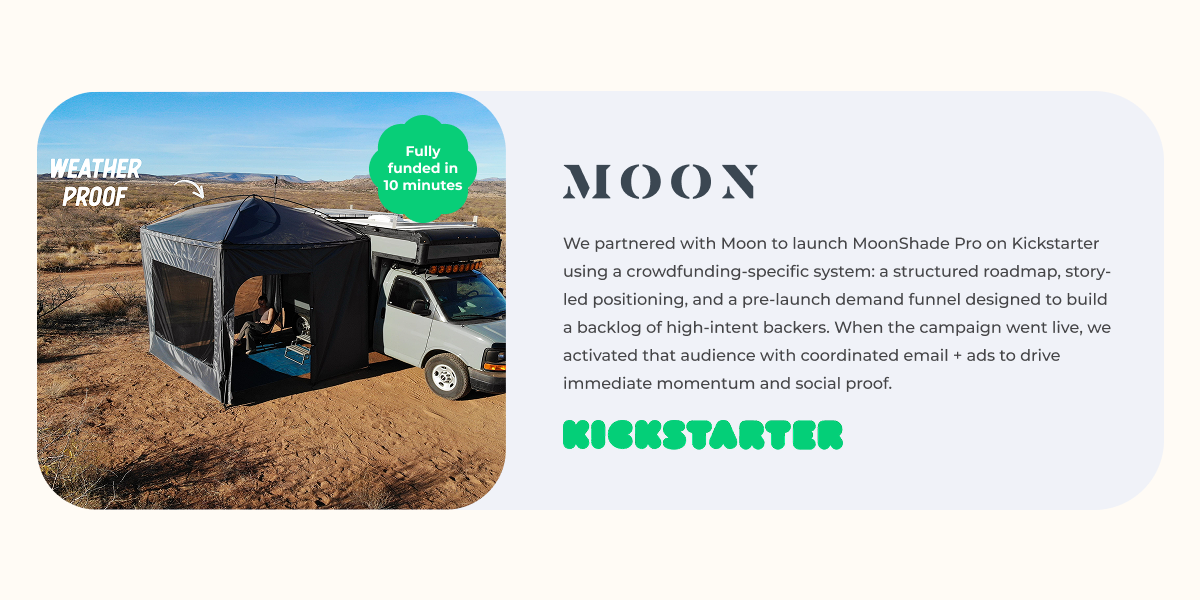
A successful transition from Kickstarter to Amazon starts long before fulfillment. The strongest brands build awareness, capture demand, and create a community of engaged supporters before launch, giving them valuable momentum to carry into the next stage of growth. Through its crowdfunding and ecommerce launch strategies, Algofy helps brands build that momentum from day one. The example below highlights how a structured Kickstarter launch can create the foundation for sustainable growth after the campaign ends.
FAQs
How do you move from Kickstarter to Amazon?
Move from Kickstarter to Amazon by fulfilling backer orders first, preparing Amazon listings and Brand Registry early, nurturing backers through email and updates, launching with inventory ready, collecting compliant reviews, and scaling Amazon PPC based on performance data.
When should a Kickstarter brand start preparing for Amazon?
A Kickstarter brand should start preparing for Amazon while campaign fulfillment is still underway. Listing content, keyword research, creative assets, inventory planning, and review workflows should be ready before the Amazon launch date.
Can Kickstarter backers become Amazon customers?
Yes. Kickstarter backers can become Amazon customers if the brand gives them a clear reason to buy again, such as easier reordering, gifting, accessories, bundles, or new product variations. Communication should feel helpful, not pushy.
Why is Amazon important after Kickstarter?
Amazon gives crowdfunded brands a long-term sales channel after the campaign ends. Kickstarter validates demand, while Amazon can support ongoing discovery, repeat purchases, reviews, advertising, and scalable ecommerce growth.
Conclusion: Keep the Momentum Moving
Kickstarter gives your product its first wave of belief. Amazon gives that belief a place to keep growing.
The brands that make the transition well do not wait for momentum to fade. They prepare early, listen closely to backers, build strong Amazon assets, and scale with data instead of assumptions.
If your Kickstarter campaign proved demand, the next step is turning that demand into a reliable marketplace engine. Book a call with our team to build a launch sequence that connects fulfillment, Amazon growth, paid media, and long-term ecommerce strategy.