
June 29, 2026

Prime Day 2026: The AI-Powered PPC Strategy Guide for Amazon Sellers

Strategy

Prime Day 2026 is likely to be more competitive, more expensive, and more automated than previous sale events. For Amazon sellers, that means the old playbook of increasing bids, watching budgets disappear, and hoping rankings improve is not enough.

The brands that win will plan early, use real-time data, and let AI support decisions around bidding, keyword targeting, budget allocation, and retargeting. Human strategy still matters. A lot. But during a high-volume event like Prime Day, manual optimization alone can miss the moment.

Key Takeaways

For Prime Day 2026, Amazon sellers should focus on:

  • Building PPC campaigns weeks before the event
  • Using AI to adjust bids and budgets in real time
  • Separating branded, non-branded, defensive, and conquest campaigns
  • Forecasting inventory before increasing ad spend
  • Retargeting Prime Day shoppers after the event
  • Reviewing post-event insights to improve long-term profitability

For brands still refining their Amazon foundation, Algofy’s guide on building an SEO-optimized Amazon Storefront is a useful place to strengthen the organic side before paid traffic spikes.

Why Prime Day 2026 Needs an AI-Powered PPC Strategy

Prime Day creates a strange mix of opportunity and pressure. Search volume rises. Conversion intent increases. Competitors become more aggressive. CPCs can climb fast. And shoppers compare options quickly.

AI-powered Amazon PPC helps brands respond faster than manual workflows. Instead of waiting until the end of the day to review performance, AI can help identify which campaigns deserve more budget, which keywords are wasting spend, and which bids need adjustment.

That matters because Prime Day is not one campaign. It is a compressed buying window where every hour can shift performance.

Pre-Prime Day PPC Preparation

The best Prime Day PPC strategy starts before the event. Waiting until the week of Prime Day usually leads to rushed campaigns, poor keyword coverage, and messy budget decisions.

Before Prime Day 2026, Amazon sellers should:
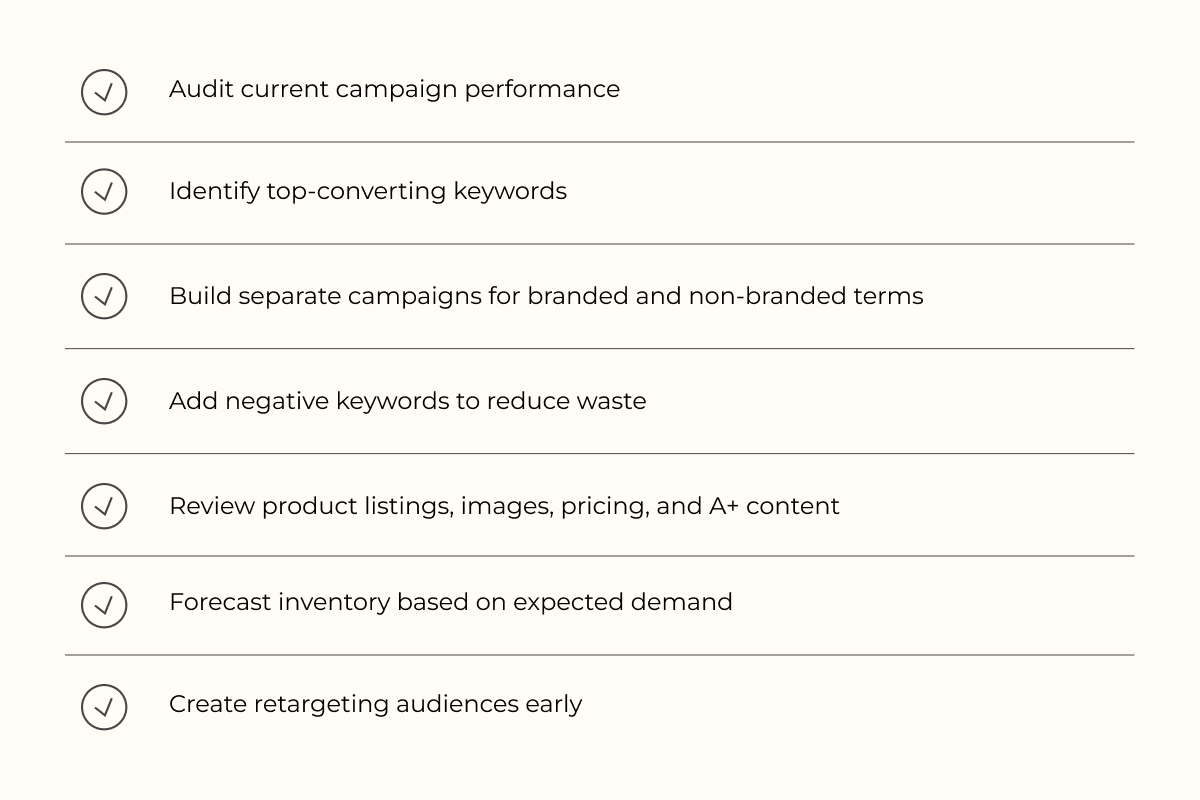
This is also the time to test. If a keyword looks promising in May or June, it may deserve more budget during Prime Day. If a product page has traffic but low conversions, more PPC spend will only make the problem more expensive.

How AI Can Optimize Amazon PPC Campaigns

AI can support Amazon PPC in four major areas: bidding, keyword targeting, budget allocation, and creative insights.

1. Smarter Bidding

During Prime Day, bids should not stay static. AI can help adjust bids based on performance signals such as conversion rate, ACOS, ROAS, time of day, and search demand.

A product converting well in the morning may deserve more aggressive bidding by midday. Another campaign may burn through budget without profitable sales. AI helps detect those shifts faster.

2. Keyword Targeting

Search term harvesting is critical. AI can help identify converting search terms from automatic campaigns and move them into manual campaigns with cleaner bid control.

It can also help spot keywords that look active but fail to convert. Those terms may need reduced bids, tighter match types, or negative keyword treatment.

3. Budget Allocation

Prime Day budgets should be flexible. If one campaign is driving profitable sales, it should not be limited while weaker campaigns keep spending.

AI-powered budget allocation helps shift spend toward campaigns with the strongest return. This is especially helpful for mid-size brands managing multiple SKUs, categories, and audiences.

4. Creative and Listing Insights

PPC performance is tied to the listing experience. If clicks are high but conversion rates are weak, the issue may be pricing, reviews, images, product positioning, or unclear content.

For sellers in competitive categories, Algofy’s post on data-driven Amazon PPC for health and wellness brands gives a helpful example of how strategy and performance data work together.

Real-Time Prime Day PPC Tactics

Once Prime Day begins, sellers need a clear operating rhythm. This is not the time to make emotional decisions because one campaign had a slow hour. It is also not the time to ignore a campaign that is clearly overspending.

Focus on:

  • Dynamic bidding: Increase bids where conversion signals are strong.
  • Dayparting: Push harder during high-conversion windows.
  • Defensive campaigns: Protect branded search terms from competitors.
  • Conquest campaigns: Target competitor-adjacent terms carefully.
  • Search term harvesting: Move profitable queries into controlled campaigns.
  • Budget pacing: Avoid spending the full budget too early.

One small but important detail: keep your hero products funded. If your best-selling SKU runs out of budget during peak search demand, the lost revenue can be painful.

Post-Prime Day Strategy

Prime Day does not end when the sale ends. Many shoppers browse during the event but buy later. Others purchase once and can be brought back through retargeting, email, or cross-channel campaigns.

After Prime Day 2026, sellers should review:

  • Which keywords drove profitable sales
  • Which campaigns had high spend but weak return
  • Which products gained organic ranking momentum
  • Which audiences should be retargeted
  • Which insights can improve Q4 planning

Post-event analysis is where AI becomes especially useful. It can help identify patterns across campaigns, products, and audiences that would take hours to review manually.

FAQs

How early should Amazon sellers prepare PPC campaigns for Prime Day 2026?

Brands should begin preparing several weeks before Prime Day. This gives enough time to test keywords, improve listings, forecast inventory, and build audiences before competition increases.

Can AI fully manage Amazon PPC during Prime Day?

AI can automate bidding, budget shifts, and performance monitoring, but human strategy is still important. The best results usually come from combining AI automation with experienced campaign oversight.

What is the biggest PPC mistake sellers make during Prime Day?

One of the biggest mistakes is increasing spend without fixing campaign structure, listings, or inventory planning first. More traffic will not solve weak conversion fundamentals.

Should sellers run defensive campaigns on Prime Day?

Yes. Defensive campaigns help protect branded search traffic when competitors become more aggressive. They are especially important for brands with strong awareness or hero products.

Conclusion

Prime Day 2026 will reward Amazon sellers that prepare early, move quickly, and use data with discipline. AI-powered PPC gives brands an advantage by helping them optimize bids, budgets, keywords, and retargeting in real time.

But tools alone are not the strategy. The real edge comes from connecting AI automation with clear campaign planning, strong listings, and experienced decision-making.

Ready to build a smarter Prime Day PPC strategy? Book a call with our team and let’s map the right approach for your Amazon growth.

 Check out our job openings here
Contact Us

Prime Day 2026: The AI-Powered PPC Strategy Guide for Amazon Sellers

June 29, 2026

Prime Day 2026 is likely to be more competitive, more expensive, and more automated than previous sale events. For Amazon sellers, that means the old playbook of increasing bids, watching budgets disappear, and hoping rankings improve is not enough.

The brands that win will plan early, use real-time data, and let AI support decisions around bidding, keyword targeting, budget allocation, and retargeting. Human strategy still matters. A lot. But during a high-volume event like Prime Day, manual optimization alone can miss the moment.

Key Takeaways

For Prime Day 2026, Amazon sellers should focus on:

  • Building PPC campaigns weeks before the event
  • Using AI to adjust bids and budgets in real time
  • Separating branded, non-branded, defensive, and conquest campaigns
  • Forecasting inventory before increasing ad spend
  • Retargeting Prime Day shoppers after the event
  • Reviewing post-event insights to improve long-term profitability

For brands still refining their Amazon foundation, Algofy’s guide on building an SEO-optimized Amazon Storefront is a useful place to strengthen the organic side before paid traffic spikes.

Why Prime Day 2026 Needs an AI-Powered PPC Strategy

Prime Day creates a strange mix of opportunity and pressure. Search volume rises. Conversion intent increases. Competitors become more aggressive. CPCs can climb fast. And shoppers compare options quickly.

AI-powered Amazon PPC helps brands respond faster than manual workflows. Instead of waiting until the end of the day to review performance, AI can help identify which campaigns deserve more budget, which keywords are wasting spend, and which bids need adjustment.

That matters because Prime Day is not one campaign. It is a compressed buying window where every hour can shift performance.

Pre-Prime Day PPC Preparation

The best Prime Day PPC strategy starts before the event. Waiting until the week of Prime Day usually leads to rushed campaigns, poor keyword coverage, and messy budget decisions.

Before Prime Day 2026, Amazon sellers should:

This is also the time to test. If a keyword looks promising in May or June, it may deserve more budget during Prime Day. If a product page has traffic but low conversions, more PPC spend will only make the problem more expensive.

How AI Can Optimize Amazon PPC Campaigns

AI can support Amazon PPC in four major areas: bidding, keyword targeting, budget allocation, and creative insights.

1. Smarter Bidding

During Prime Day, bids should not stay static. AI can help adjust bids based on performance signals such as conversion rate, ACOS, ROAS, time of day, and search demand.

A product converting well in the morning may deserve more aggressive bidding by midday. Another campaign may burn through budget without profitable sales. AI helps detect those shifts faster.

2. Keyword Targeting

Search term harvesting is critical. AI can help identify converting search terms from automatic campaigns and move them into manual campaigns with cleaner bid control.

It can also help spot keywords that look active but fail to convert. Those terms may need reduced bids, tighter match types, or negative keyword treatment.

3. Budget Allocation

Prime Day budgets should be flexible. If one campaign is driving profitable sales, it should not be limited while weaker campaigns keep spending.

AI-powered budget allocation helps shift spend toward campaigns with the strongest return. This is especially helpful for mid-size brands managing multiple SKUs, categories, and audiences.

4. Creative and Listing Insights

PPC performance is tied to the listing experience. If clicks are high but conversion rates are weak, the issue may be pricing, reviews, images, product positioning, or unclear content.

For sellers in competitive categories, Algofy’s post on data-driven Amazon PPC for health and wellness brands gives a helpful example of how strategy and performance data work together.

Real-Time Prime Day PPC Tactics

Once Prime Day begins, sellers need a clear operating rhythm. This is not the time to make emotional decisions because one campaign had a slow hour. It is also not the time to ignore a campaign that is clearly overspending.

Focus on:

  • Dynamic bidding: Increase bids where conversion signals are strong.
  • Dayparting: Push harder during high-conversion windows.
  • Defensive campaigns: Protect branded search terms from competitors.
  • Conquest campaigns: Target competitor-adjacent terms carefully.
  • Search term harvesting: Move profitable queries into controlled campaigns.
  • Budget pacing: Avoid spending the full budget too early.

One small but important detail: keep your hero products funded. If your best-selling SKU runs out of budget during peak search demand, the lost revenue can be painful.

Post-Prime Day Strategy

Prime Day does not end when the sale ends. Many shoppers browse during the event but buy later. Others purchase once and can be brought back through retargeting, email, or cross-channel campaigns.

After Prime Day 2026, sellers should review:

  • Which keywords drove profitable sales
  • Which campaigns had high spend but weak return
  • Which products gained organic ranking momentum
  • Which audiences should be retargeted
  • Which insights can improve Q4 planning

Post-event analysis is where AI becomes especially useful. It can help identify patterns across campaigns, products, and audiences that would take hours to review manually.

FAQs

How early should Amazon sellers prepare PPC campaigns for Prime Day 2026?

Brands should begin preparing several weeks before Prime Day. This gives enough time to test keywords, improve listings, forecast inventory, and build audiences before competition increases.

Can AI fully manage Amazon PPC during Prime Day?

AI can automate bidding, budget shifts, and performance monitoring, but human strategy is still important. The best results usually come from combining AI automation with experienced campaign oversight.

What is the biggest PPC mistake sellers make during Prime Day?

One of the biggest mistakes is increasing spend without fixing campaign structure, listings, or inventory planning first. More traffic will not solve weak conversion fundamentals.

Should sellers run defensive campaigns on Prime Day?

Yes. Defensive campaigns help protect branded search traffic when competitors become more aggressive. They are especially important for brands with strong awareness or hero products.

Conclusion

Prime Day 2026 will reward Amazon sellers that prepare early, move quickly, and use data with discipline. AI-powered PPC gives brands an advantage by helping them optimize bids, budgets, keywords, and retargeting in real time.

But tools alone are not the strategy. The real edge comes from connecting AI automation with clear campaign planning, strong listings, and experienced decision-making.

Ready to build a smarter Prime Day PPC strategy? Book a call with our team and let’s map the right approach for your Amazon growth.

Related articles

article

How to Use Reddit to Drive Amazon Sales: A Tactical Playbook for Ecom Brands

article

Prime Day 2026: The AI-Powered PPC Strategy Guide for Amazon Sellers

article

Google Marketing Live 2026: What Ecommerce Brands Need to Know About Google’s AI-First Future