





.png)
.png)


Amazon titles used to be a game of “cram it all in.” Brand, product type, size, color, compatibility, five synonyms, and a few misspellings for good luck. Then Amazon updated its rules.
Amazon’s updated product title policy (effective January 21, 2025) is a clear signal: titles need to be readable, consistent, and customer-first. Amazon now caps length, restricts certain special characters, and limits repeating the same word. If you ignore it, Amazon can push override suggestions and ultimately update titles for compliance after a review window.
Key takeaways
- Amazon’s current title policy limits titles to 200 characters (most categories), bans specific special characters, and restricts repeating the same word more than twice (with exceptions).
- Keyword stuffing is now more likely to hurt conversion and can trigger compliance issues that lead to forced edits.
- Your Amazon SEO strategy should shift toward clarity + relevance across the full listing: titles, bullets, backend search terms, and A+ content.
What changed in Amazon’s product title guidelines
Amazon’s announcement boils down to three practical constraints that directly discourage keyword-stuffed titles:
- Title length: For most categories, titles may not exceed 200 characters, including spaces.
- Special characters: Certain characters are not allowed (*!, $, ?, _, {, }, ^, ¬, ¦**) unless they’re part of the brand name.
- Word repetition: Titles may not contain the same word more than twice, with exceptions for prepositions, articles, and conjunctions.
And here’s the operational detail sellers can’t overlook: Amazon stated it may provide override suggestions in “Review Listing Updates,” giving brand owners 14 days to act before Amazon updates titles to comply (rolled out gradually).
That’s the “death” part. Not poetic death. Policy death.
Why keyword-stuffed titles no longer work (rankings or conversions)
Keyword stuffing always had a tradeoff: you might catch extra long-tail searches, but you also made your listing look spammy. Amazon now openly prioritizes clarity and consistency because redundant wording and odd characters can reduce customer confidence.
There’s another layer too: the marketplace is increasingly mobile-first. On smaller screens, bloated titles get truncated, which means your “important” keywords may never be seen by the shopper. Several industry analyses recommend front-loading the essentials early in the title because that’s what shoppers actually read.
So the new reality is simple:
- Stuffing can push you into non-compliance.
- Stuffing can lower click-through rate.
- Lower click-through rate can snowball into weaker performance.
How Amazon evaluates relevance now: think listing system, not title hack
Amazon isn’t saying “keywords don’t matter.” It’s saying “the title isn’t your dumping ground.”
Industry breakdowns of the 2025 update emphasize constraints around length, repetition, and customer-focused formatting, which pushes SEO work into a broader, more disciplined approach.
In practice, that means your ranking and discoverability are supported by:
- A clean, compliant title that communicates the product fast
- Bullets that reinforce key use cases and differentiators
- Backend search terms that capture synonyms and long-tail intent
- A+ content that improves conversion and supports on-page relevance signals
- Pricing, availability, and review velocity (the unglamorous stuff that moves needles)
If your strategy was “title first, everything else later,” it’s time to flip that.
Best practices for writing compliant, high-performing Amazon titles
Here’s the framework we use when we’re optimizing titles as part of a full-funnel Amazon system (traffic + conversion + retention).
1) Lead with the shopper’s first question
Put the essentials up front, in order:
- Brand
- Product type
- Core variant (size/count/color/material)
- 1–2 high-value attributes (only if they truly matter)
Why? Because clarity drives clicks, and clicks drive opportunity.
2) Treat the 200-character limit as a ceiling, not a goal
Yes, the rule says 200 characters for most categories. But “legal maximum” is not the same as “best-performing.” Shorter titles tend to scan better and reduce truncation risk on mobile.
3) Stop repeating keywords like you’re bargaining with the algorithm
If Amazon limits repeating the same word more than twice, your title structure needs discipline. Use one strong primary phrase, then use variants elsewhere in the listing.
4) Move synonym coverage into backend search terms (and bullets)
A quick gut-check: if a phrase is included only because “someone might type it,” and it doesn’t clearly improve shopper understanding or conversion, it probably belongs in backend search terms and not in your title or primary bullets.
5) Build titles that match how people speak
This is a quiet advantage today. Readable titles map better to AI-driven search behaviors and snippet-style answers because they actually parse like human language. Clean structure helps everywhere, not only on Amazon.
Small digression, but it matters: teams that write like humans often outperform teams that write like compliance lawyers. Keep it professional, still approachable. That’s the balance.
A practical rewrite template (no fluff, no stuffing)
Use this as a starting structure:
Brand + Product Type + Variant + Primary Benefit/Feature + Intended Use (optional)
Example pattern (generic):
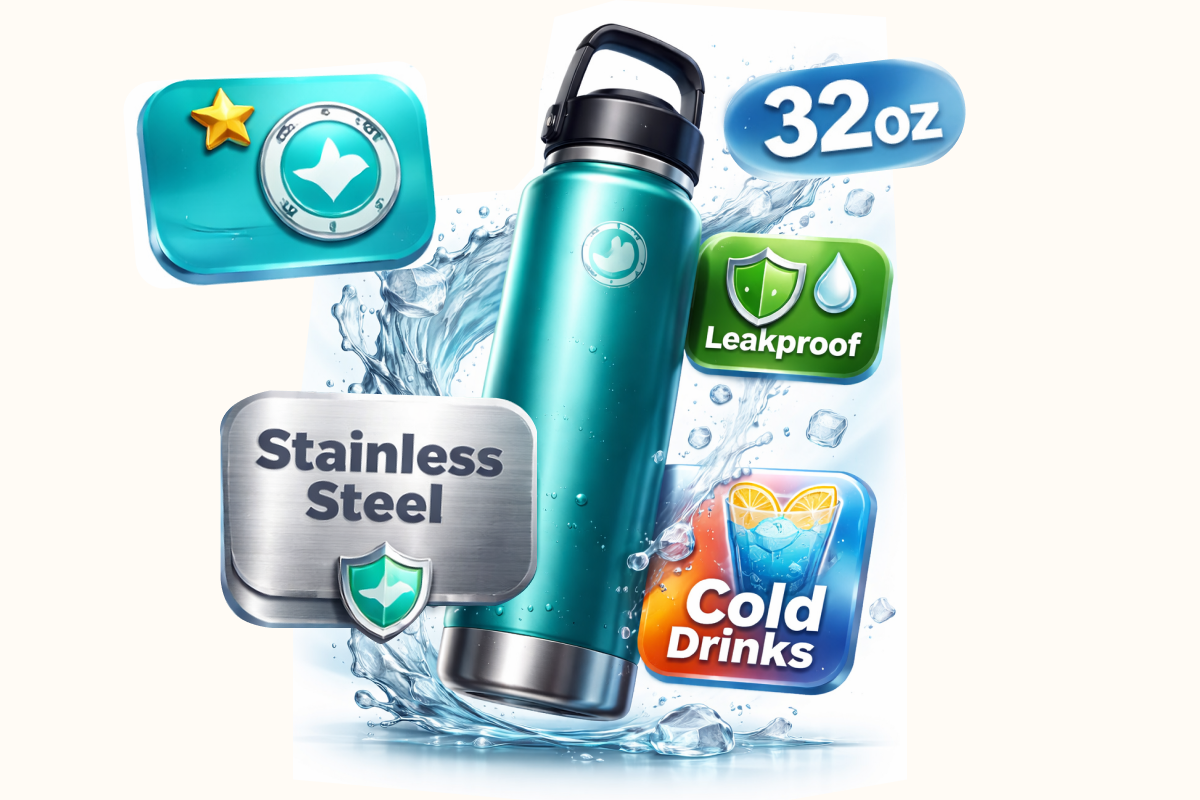
Brand + Stainless Steel Water Bottle, 32 oz, Insulated, Leakproof Lid, Cold Drinks
Notice what’s missing: eight duplicate keywords and five separators.
SEO strategy shifts you should make right now
- Audit your catalog for compliance risk (especially repetition and special characters).
- Prioritize top revenue ASINs first. Don’t boil the ocean.
- Rebuild keyword maps across the listing, not only the title.
- Measure impact beyond rank: CTR, CVR, and session-to-order rate will tell you if the new title is actually helping.
For a structured approach, our team combines title updates with full listing optimization and ad strategy, ensuring visibility stays strong while you clean up your catalog. Check out our Amazon performance results in our Case Studies.
Frequently Asked Questions
Can Amazon change my product title if it’s non-compliant?
Amazon described providing override suggestions to brand owners in “Review Listing Updates,” with 14 days to act before Amazon updates titles for compliance (rolled out gradually).
Which special characters are not allowed in Amazon titles?
Amazon listed several disallowed characters (including !, $, ?, _, {, }, ^, ¬, ¦) unless they are part of the brand name.
Does keyword stuffing still help Amazon SEO?
It’s far less reliable now. The rules restrict repetition and push sellers toward concise, customer-focused titles. Keyword coverage still matters, but it belongs across the listing, especially backend terms and bullets.
What’s the best Amazon SEO strategy after the 2025 title update?
Write compliant, readable titles that front-load the essentials, then build relevance through a complete listing system: bullets, backend keywords, A+ content, and conversion-focused creative.
Conclusion: the “new” Amazon title playbook is calmer, and it performs
Amazon’s title rules are not a minor formatting tweak. They’re a forcing function. If your growth depends on keyword-stuffed titles, you’re building on sand.
The upside: a cleaner title strategy is easier to scale, easier to manage across catalogs, and usually better for conversion. Your brand looks more trustworthy. Your shoppers understand the product faster. And your SEO becomes more resilient because it’s distributed across the listing, not trapped in one messy line of text.
If you want help auditing, rewriting, and rolling out compliant titles without sacrificing visibility, book a call with our team. We’ll map the right keywords, rebuild the listing system, and keep performance at the center of the work.