


March 2, 2026

E-commerce Measurement in 2026: Why the Pixel Era Is Over and Server-Side Tracking Is the Future

Marketing

If you’re scaling on Amazon while also pushing growth through Meta and Google, measurement can start to feel like a daily argument between platforms. One dashboard says revenue is up. Another says performance is flat. Your pixel-based conversion tracking looks “fine” until it doesn’t and you only notice after the budget has already shifted in the wrong direction.

That’s the 2026 reality: the browser is no longer a reliable source of truth for ecommerce measurement, especially when privacy protections and tracking restrictions keep tightening across environments like Safari.

Key takeaways

  • Browser pixels miss conversions because browsers and devices limit tracking behaviors, especially in privacy-forward environments like Safari.
  • The “single source of truth” can’t be a browser event stream anymore. Signal loss is systemic, not a setup mistake.
  • Server-side tracking improves data ownership and consistency by routing events through your infrastructure first, then forwarding to ad and analytics tools.
  • Cleaner signals matter more than ever because ad platforms optimize based on the conversion data you send them.
  • Brands that invest in measurement infrastructure now move faster later, with fewer budget swings driven by messy attribution.

The pixel problem in 2026: it’s not broken, it’s boxed in

Pixels were built for a simpler world: desktop browsing, fewer devices, fewer restrictions, and more dependable cookies. Now your customers move between:

  • Amazon app and mobile web
  • Social apps and in-app browsers
  • Email clicks, organic search, and direct visits
  • Multiple devices before purchase

Meanwhile, browsers are actively designed to reduce cross-site tracking behaviors. Apple has documented Safari’s privacy posture for years, including limiting tracking techniques that interfere with user privacy.

Even Google’s long-running third-party cookie deprecation plan has shifted into a user-choice approach rather than a clean “cookies off” end-state. That uncertainty alone has pushed brands to build measurement systems that don’t depend on browser permissions staying friendly.

So if you’re asking, “Why does Meta say one thing and GA says another?”, the honest answer is: the browser layer is a noisy narrator.

What “server-side tracking” actually means (in plain language)

Server-side tracking changes the path your data takes.

Instead of sending events from the browser directly to multiple vendors, you send events to a server endpoint you control, then decide what gets forwarded and how. Google describes server-side tagging as adding a server container that receives measurement data and can route it onward.

Think of it like a customs checkpoint for your conversion data:

  • Client-side pixel: Browser → Vendor
  • Server-side setup: Browser/App → Your server → Vendor(s)

This setup gives you more control over consistency, data quality, and governance, without relying on the browser to behave the same way across devices.

Why server-side tracking wins for ecommerce measurement in 2026

1) More consistent event delivery

Browsers can block, limit, or drop requests. Server-side collection can reduce the dependency on fragile browser execution, then forward conversions in a more stable way.

For example, Meta’s Conversions API is explicitly designed to send events from your server to Meta systems, reducing reliance on browser-only tracking.

2) Better control over what data you share

A common misconception is that server-side means “collect everything.” In practice, it’s the opposite. A good server-side design enforces rules:

  • only send required parameters
  • standardize event names and schemas
  • remove junk data and duplicates
  • maintain clear consent logic aligned with your policies

That’s how you get cleaner reporting and fewer phantom spikes.

3) Cleaner signals for AI-driven optimization

Ad platforms optimize based on the conversion signals you provide. When events are inconsistent, optimization gets weird: spend chases noisy audiences, retargeting pools shrink, and creative learnings get muddy.

Server-side tracking is not magic. It’s plumbing. But good plumbing makes every downstream system run better.

4) Less “attribution panic” across Amazon + DTC

If your brand sells on Amazon and DTC, attribution is already complicated. You’re juggling platform-native reporting plus external media platforms.

Server-side measurement won’t eliminate every discrepancy, but it can reduce the number of places where data gets lost and make your internal reporting more defensible.

A practical migration path: how to move without breaking everything

Server-side tracking works best when you treat it like an engineering project with marketing outcomes.

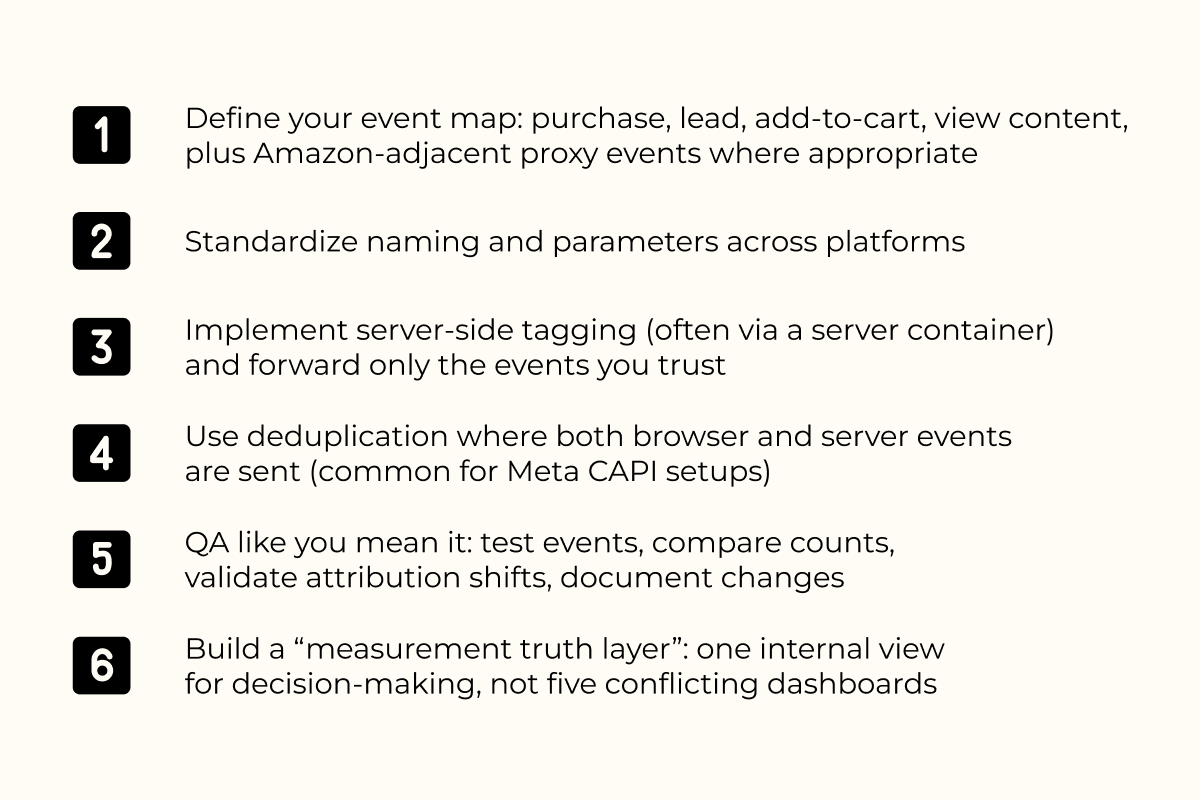
Here’s a grounded rollout that teams actually stick to:
If you want a broader view of how Algofy approaches full-funnel growth systems, our e-commerce resource hub is a good starting point.

Frequently Asked Questions

What is server-side tracking in ecommerce?

Server-side tracking is a measurement approach where conversion events are collected through a server you control, then forwarded to ad and analytics platforms.

Is pixel tracking dead in 2026?

Pixels still exist, but browser-only measurement is less dependable because browsers increasingly restrict tracking behaviors and delete or limit tracking data.

Does server-side tracking improve Meta ads performance?

It can improve measurement consistency and event matching because Meta supports server-to-server event collection via Conversions API. Better event quality can support optimization, assuming your setup and event schema are correct.

What’s the biggest mistake brands make when moving server-side?

Treating it like a “set it and forget it” tool. Server-side tracking needs an event strategy, governance, testing, and ongoing maintenance.

Measurement is becoming infrastructure, not a marketing checkbox

In 2026, measurement is less about finding the perfect attribution model and more about building a data system you can trust. Pixels are constrained by design. The browser is not your friend here. It’s doing what it’s supposed to do.

Server-side tracking is the practical answer: more control, cleaner signals, and fewer budget decisions made in the dark.

If you’re ready to upgrade your measurement foundation across Amazon + DTC, book a call with our team and we’ll map the right server-side tracking approach for your stack and growth goals.

 Check out our job openings here
Contact Us

E-commerce Measurement in 2026: Why the Pixel Era Is Over and Server-Side Tracking Is the Future

March 2, 2026

If you’re scaling on Amazon while also pushing growth through Meta and Google, measurement can start to feel like a daily argument between platforms. One dashboard says revenue is up. Another says performance is flat. Your pixel-based conversion tracking looks “fine” until it doesn’t and you only notice after the budget has already shifted in the wrong direction.

That’s the 2026 reality: the browser is no longer a reliable source of truth for ecommerce measurement, especially when privacy protections and tracking restrictions keep tightening across environments like Safari.

Key takeaways

  • Browser pixels miss conversions because browsers and devices limit tracking behaviors, especially in privacy-forward environments like Safari.
  • The “single source of truth” can’t be a browser event stream anymore. Signal loss is systemic, not a setup mistake.
  • Server-side tracking improves data ownership and consistency by routing events through your infrastructure first, then forwarding to ad and analytics tools.
  • Cleaner signals matter more than ever because ad platforms optimize based on the conversion data you send them.
  • Brands that invest in measurement infrastructure now move faster later, with fewer budget swings driven by messy attribution.

The pixel problem in 2026: it’s not broken, it’s boxed in

Pixels were built for a simpler world: desktop browsing, fewer devices, fewer restrictions, and more dependable cookies. Now your customers move between:

  • Amazon app and mobile web
  • Social apps and in-app browsers
  • Email clicks, organic search, and direct visits
  • Multiple devices before purchase

Meanwhile, browsers are actively designed to reduce cross-site tracking behaviors. Apple has documented Safari’s privacy posture for years, including limiting tracking techniques that interfere with user privacy.

Even Google’s long-running third-party cookie deprecation plan has shifted into a user-choice approach rather than a clean “cookies off” end-state. That uncertainty alone has pushed brands to build measurement systems that don’t depend on browser permissions staying friendly.

So if you’re asking, “Why does Meta say one thing and GA says another?”, the honest answer is: the browser layer is a noisy narrator.

What “server-side tracking” actually means (in plain language)

Server-side tracking changes the path your data takes.

Instead of sending events from the browser directly to multiple vendors, you send events to a server endpoint you control, then decide what gets forwarded and how. Google describes server-side tagging as adding a server container that receives measurement data and can route it onward.

Think of it like a customs checkpoint for your conversion data:

  • Client-side pixel: Browser → Vendor
  • Server-side setup: Browser/App → Your server → Vendor(s)

This setup gives you more control over consistency, data quality, and governance, without relying on the browser to behave the same way across devices.

Why server-side tracking wins for ecommerce measurement in 2026

1) More consistent event delivery

Browsers can block, limit, or drop requests. Server-side collection can reduce the dependency on fragile browser execution, then forward conversions in a more stable way.

For example, Meta’s Conversions API is explicitly designed to send events from your server to Meta systems, reducing reliance on browser-only tracking.

2) Better control over what data you share

A common misconception is that server-side means “collect everything.” In practice, it’s the opposite. A good server-side design enforces rules:

  • only send required parameters
  • standardize event names and schemas
  • remove junk data and duplicates
  • maintain clear consent logic aligned with your policies

That’s how you get cleaner reporting and fewer phantom spikes.

3) Cleaner signals for AI-driven optimization

Ad platforms optimize based on the conversion signals you provide. When events are inconsistent, optimization gets weird: spend chases noisy audiences, retargeting pools shrink, and creative learnings get muddy.

Server-side tracking is not magic. It’s plumbing. But good plumbing makes every downstream system run better.

4) Less “attribution panic” across Amazon + DTC

If your brand sells on Amazon and DTC, attribution is already complicated. You’re juggling platform-native reporting plus external media platforms.

Server-side measurement won’t eliminate every discrepancy, but it can reduce the number of places where data gets lost and make your internal reporting more defensible.

A practical migration path: how to move without breaking everything

Server-side tracking works best when you treat it like an engineering project with marketing outcomes.

Here’s a grounded rollout that teams actually stick to:

If you want a broader view of how Algofy approaches full-funnel growth systems, our e-commerce resource hub is a good starting point.

Frequently Asked Questions

What is server-side tracking in ecommerce?

Server-side tracking is a measurement approach where conversion events are collected through a server you control, then forwarded to ad and analytics platforms.

Is pixel tracking dead in 2026?

Pixels still exist, but browser-only measurement is less dependable because browsers increasingly restrict tracking behaviors and delete or limit tracking data.

Does server-side tracking improve Meta ads performance?

It can improve measurement consistency and event matching because Meta supports server-to-server event collection via Conversions API. Better event quality can support optimization, assuming your setup and event schema are correct.

What’s the biggest mistake brands make when moving server-side?

Treating it like a “set it and forget it” tool. Server-side tracking needs an event strategy, governance, testing, and ongoing maintenance.

Measurement is becoming infrastructure, not a marketing checkbox

In 2026, measurement is less about finding the perfect attribution model and more about building a data system you can trust. Pixels are constrained by design. The browser is not your friend here. It’s doing what it’s supposed to do.

Server-side tracking is the practical answer: more control, cleaner signals, and fewer budget decisions made in the dark.

If you’re ready to upgrade your measurement foundation across Amazon + DTC, book a call with our team and we’ll map the right server-side tracking approach for your stack and growth goals.

Related articles

article

E-commerce Measurement in 2026: Why the Pixel Era Is Over and Server-Side Tracking Is the Future

article

Best AI Tools for Amazon Sellers in 2026

article

AI Rufus Shopping Assistant: How Amazon’s Conversational AI Will Change Product Discovery in 2026